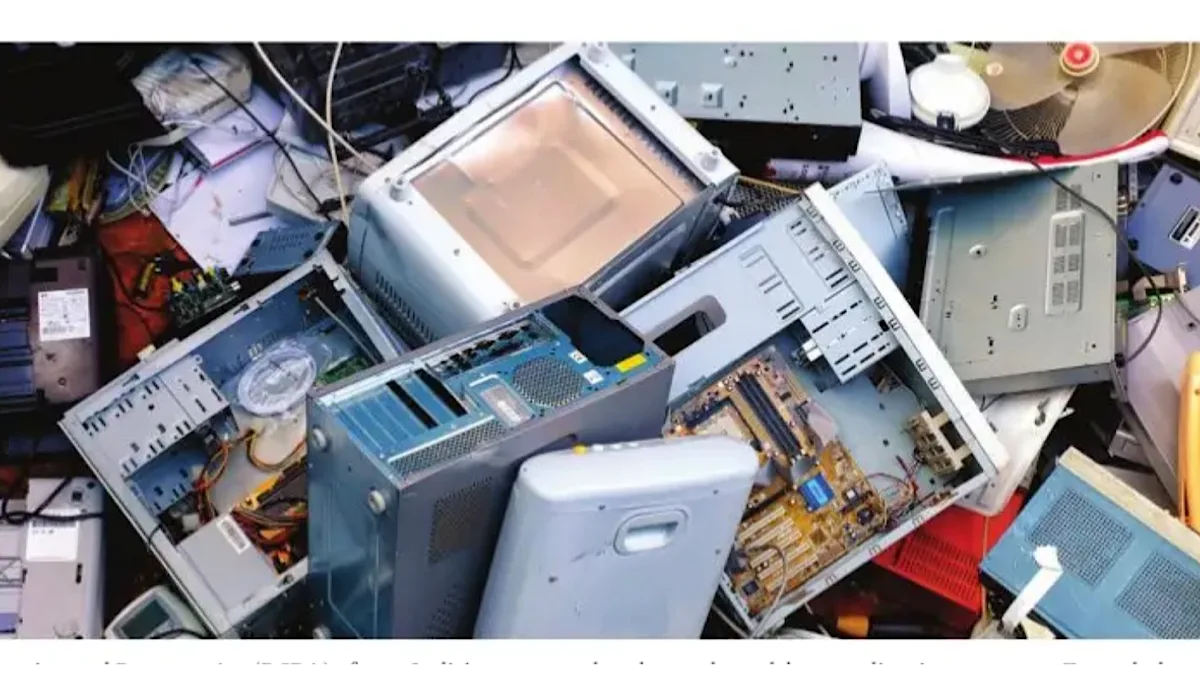
When a smartphone that once felt essential is tossed into a drawer or a television is replaced for a marginally sharper picture, what follows rarely stays out of sight for long. Electronic waste ~ or e-waste ~ is one of the fastest-growing waste streams on the planet, rich in valuable metals and dangerous when mishandled. The legal frameworks that govern its life after use are patchy and evolving: some nations lean on producer responsibility and take-back systems, others on hazardous-waste controls and fees.
The result is a global tangle that challenges regulators, industry and consumers alike. E-waste is unique because it is both treasure and threat. Devices contain recoverable commodities such as gold, copper and rare earths, but they also harbour lead, mercury, brominated flame retardants and other substances that can contaminate soil, water and air if dismantled or burned in informal settings. Managing this duality has pushed countries to adopt laws addressing collection, recycling, reuse and transboundary movement.
Advertisement
The United States, the United Kingdom and India ~ three very different legal ecosystems ~ offer instructive contrasts. Their e-waste management mechanism, including relevant laws highlight that there is no single magic bullet to address an issue that is turning into a universal health hazard, perhaps only secondary to atmospheric pollution. In the United States there is no single federal “e-waste” statute.
Instead, the Resource Conservation and Recovery Act (RCRA) of 1976 remains the primary federal law that governs hazardous wastes ~ and by extension can touch on certain components of e-waste that meet hazardous-waste criteria. RCRA gives the Environmental Protection Agency authority to regulate hazardous wastes “from cradle to grave,” but electronic items that are not classified as hazardous may fall through regulatory gaps. That reality has left significant room for state action and has produced a mosaic of state laws and fees. California offers a model of more proactive state regulation.
The Electronic Waste Recycling Act of 2003 (SB 20) established a Covered Electronic Waste (CEW) recycling programme and an advanced recycling fee applied at retail for many video display devices; the initiative aimed to fund convenient collection and proper recycling across the state and to curb illegal dumping. Over time California’s laws have expanded to cover more devices and to refine who ~ manufacturer, retailer or customer ~ carries responsibility. California’s approach shows how subnational policy innovation can plug gaps left by federal law. Across the Atlantic, the United Kingdom’s legal approach is anchored in the Waste Electrical and Electronic Equipment (WEEE) Regulations.
Originating from European Union directives, the UK’s WEEE Regulations (2013, as amended) place clear responsibilities on producers ~ including registration, marking, financing of collection and treatment, and reporting. The regulations also create a framework for Approved Treatment Facilities and require evidence trails (WEEE evidence) to ensure that collected equipment is properly processed rather than exported illegally or sent to landfill. The WEEE regime is an example of a producer-responsibility model designed to push product stewardship upstream. India’s response has been shaped by both environmental urgency and the need to formalize a sprawling informal recycling sector.
The E-Waste (Management) Rules, first notified in 2016 and subsequently amended (including significant amendments and a new 2022 notification), introduced extended producer responsibility (EPR), collection targets, mandatory authorization for dismantlers and recyclers, and measures to document the life cycle of equipment. The rules aim to move more e-waste into regulated channels and to phase out hazardous practices at the grassroots level. Government agencies including the Central Pollution Control Board have followed up with implementation guidance and Standard Operating Procedures for formal recyclers. Laws alone, however, do not guarantee greener outcomes.
In all three jurisdictions enforcement, consumer behaviour and infrastructure remain limiting factors. In the U.S., the federal reliance on state initiatives has produced uneven coverage: some states have robust take-back programmes, while others have limited or no systems. In the UK, compliance and traceability obligations have reduced illegal exports, but challenges remain with cross-border dumping and the economics of recycling low-value items. In India, despite stronger rules and EPR provisions, a large informal sector persists ~ driven by employment realities and the high value of recovered materials – creating health and environmental risks unless formalized and brought into compliance. Practical fixes require a combination of policy instruments.
Extended producer responsibility ~ where manufacturers must finance or operate take-back and recycling ~ is central across successful systems because it realigns incentives toward design for reuse and recyclability. Financial mechanisms such as California’s point-of-sale fees and the UK’s producer compliance schemes help fund the logistics. Clear hazardous-waste rules, like RCRA in the U.S., deter unsafe disposal of the most dangerous components. And technology and standardisation ~ for tracking, certification of treatment facilities, and safer recycling methods – are essential to prevent leakage into informal streams or illicit export. But the human dimension matters equally. Consumers need accessible, low-friction return options – curbside pick-up, storefront drop-offs or mail-back kits ~ paired with awareness campaigns.
Informal recyclers need pathways into the formal economy: training, protective equipment, accreditation and fair procurement by licensed dismantlers. Governments must invest in enforcement and cross-border cooperation to stop illegal shipments. Industry can help by designing longer-lived, repairable products and by sharing responsibility for take-back logistics. Every link must do its part. E-waste is not an intractable problem; it is a design and policy problem.
Countries that have combined clear legal duties (producer responsibility, hazardous waste control, funding mechanisms and robust enforcement) while facilitating pathways for informal actors stand the best chance of turning obsolete gadgets back into raw materials rather than pollutants. For consumers, the imperative is simple: recycling electronics responsibly isn’t just an ethical choice, it’s a civic one. The law can push and cajole, but collective action will determine whether our devices’ afterlives are circular ~ and clean ~ or toxic and tragic.
(The writer is Assistant Professor in English, Pritilata Waddedar Mahavidyalaya, Nadia)